
Tag: Family Law
-

Can You Remarry Without an Annulment or Declaration of Nullity in the Philippines?
Imagine this: a person has been separated from a spouse for many years. They no longer live together, have built separate lives, and may even believe that the marriage has already ended. Years later, the person meets someone new and wants to get married again. A common question then arises: Can a person remarry simply…
-
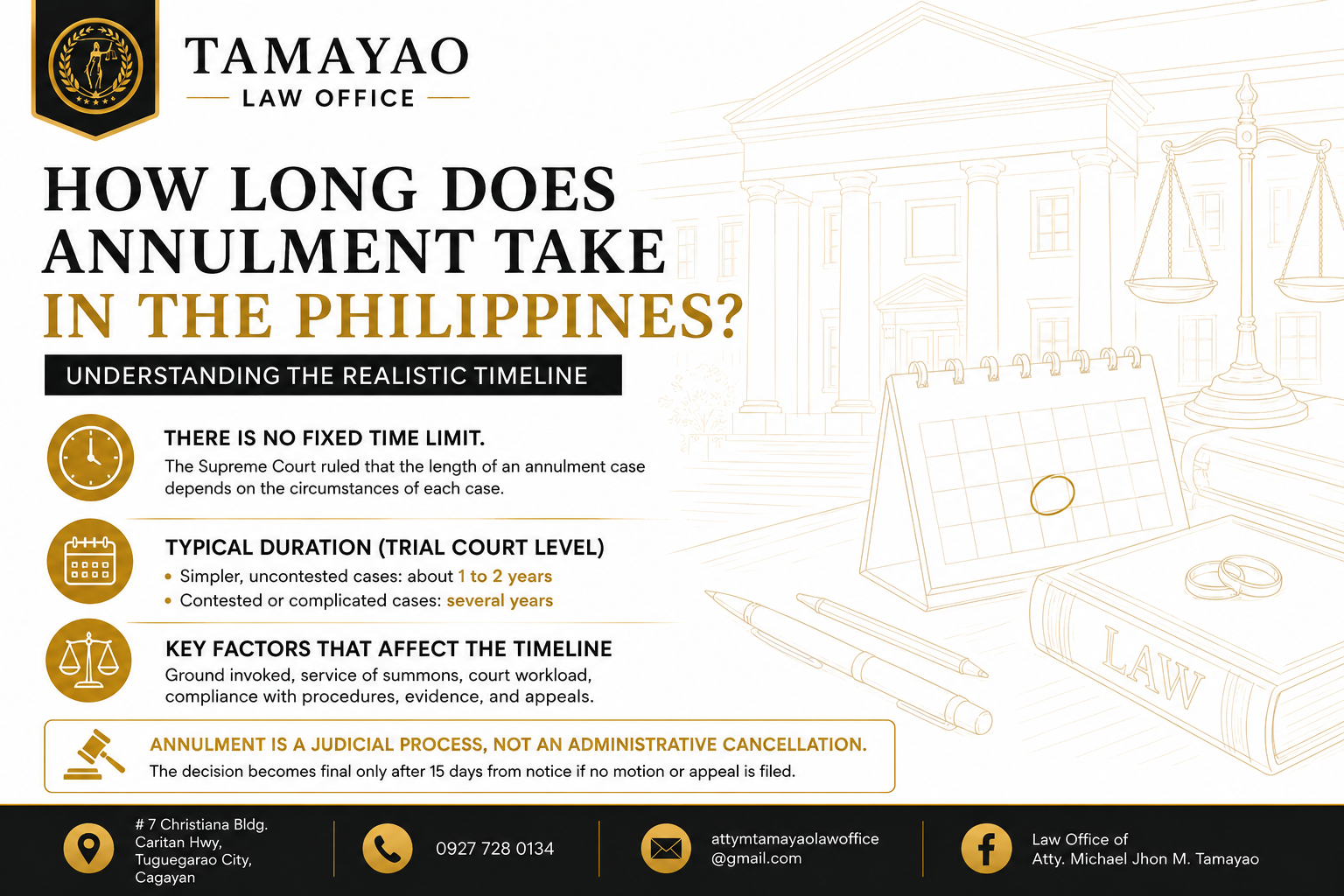
How Long Does Annulment Take in the Philippines? Understanding the Realistic Timeline
Many Filipinos ask the same question after a marital relationship breaks down: “How long will an annulment take?” Some hear stories of cases finishing within a year, while others wait several years before receiving a final court decision. Because annulment affects family status, property relations, and future plans, understanding the legal timeline matters. A common…
-
Who is Legally Obliged to Provide Financial Support in the Philippines?
Families face difficult financial realities every single day. A sudden illness might strike an elderly parent. A child could begin preparing for college enrollment. A spouse might suddenly leave the family home. In these trying times, distressed family members frequently wonder who carries the legal responsibility to provide financial assistance. Financial disputes often trigger intense…
-
Annulment in the Philippines: What You Need to Know Before Filing a Case
Marriage carries legal, personal, and social consequences. However, some marriages encounter serious problems that lead one spouse to consider annulment. Many Filipinos hear stories about annulment cases from friends, relatives, or social media. Unfortunately, these stories often create confusion about how the process actually works. Before filing a case, it is important to understand that…
-
Filing Annulment cases while abroad: A Comprehensive Guide for OFWs and Foreigners
Imagine Maria, a dedicated nurse working in Dubai for the last five years. While she works long shifts to provide for her family, she discovers that her husband in the Philippines has established a second family. Maria wants to move on and legally dissolve her marriage, but she faces a daunting reality: she cannot afford…
-
Caught in the Middle: A Guide to Child Custody and Parental Kidnapping Laws in the Philippines
Imagine a scenario where a marriage begins to crumble. In the heat of an argument, one parent leaves the conjugal home and takes the children without the other’s consent. This situation is heartbreakingly common in the Philippines. It leaves many parents asking: Is this kidnapping? Who has the legal right to keep the child? Understanding…
-
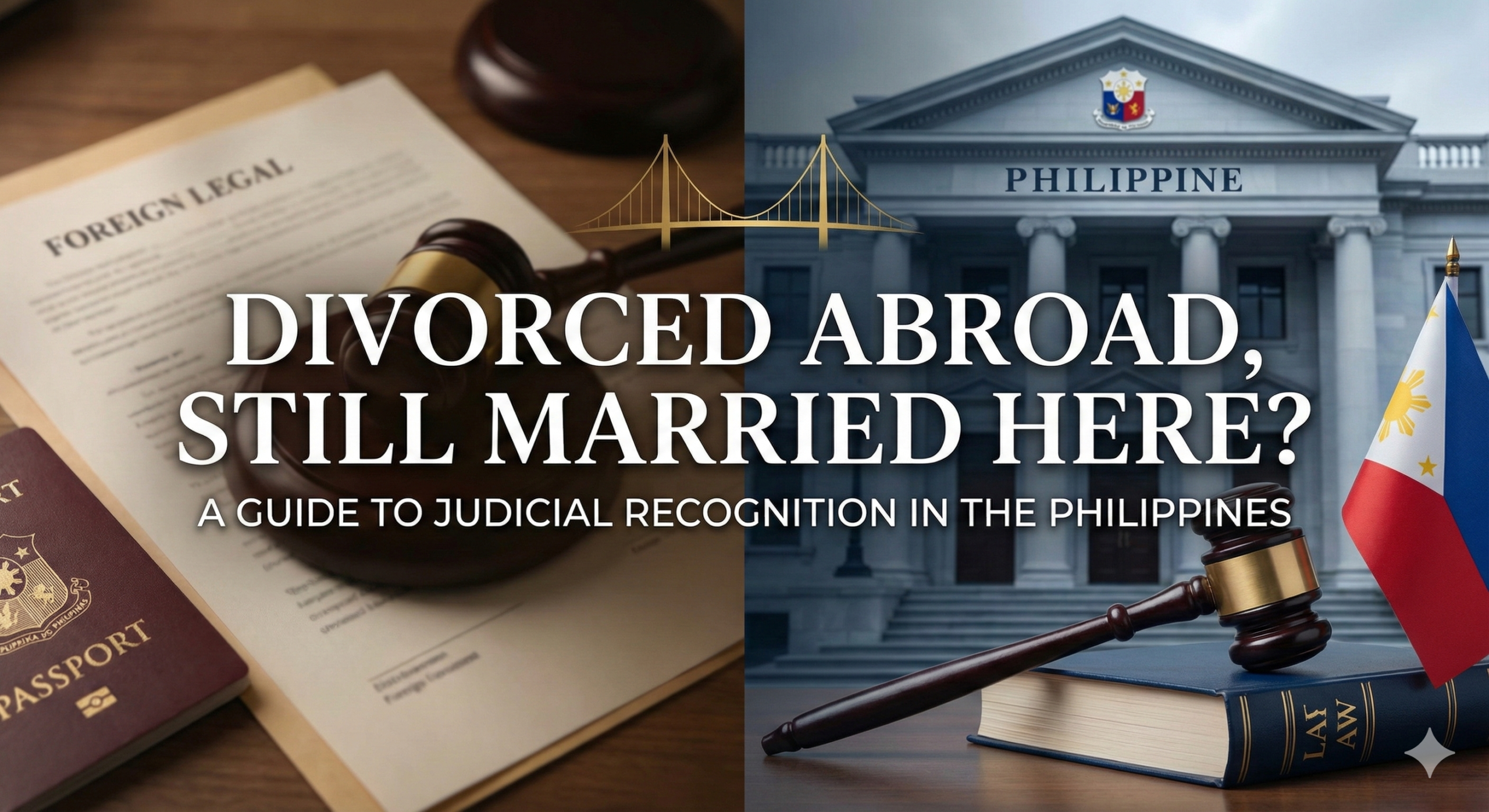
Divorced Abroad, Still Married Here? A Guide to Judicial Recognition in the Philippines Judicial Recognition of Foreign Divorce
Introduction: The Filipino Marital Paradox The Philippines stands almost alone in the world, alongside the Vatican City, as a nation without a general law on absolute divorce. For the average Filipino couple living in Manila or Cebu, the marital bond is permanent, dissolved only by death or the rigorous process of annulment. However, millions of…
-

Unseen Scars: A Comprehensive Analysis of Psychological Violence Under RA 9262 in the Philippines
Violence within the Filipino family has historically been viewed through a narrow lens, often limited to visible physical injuries. However, the enactment of Republic Act No. 9262, known as the Anti-Violence Against Women and Their Children Act of 2004, acknowledged a profound truth: the deepest wounds are often those that do not bleed. Psychological violence—an…
-

STRATEGIC MASTERY OF PROVISIONAL REMEDIES: RECEIVERSHIP (RULE 59)
THE STRATEGIC IMPERATIVE In the Philippine litigation landscape, the delay between filing a complaint and obtaining a final judgment can span decades. It is within this “temporal chasm” that the provisional remedy of Receivership (Rule 59) operates. It serves as the “strong arm of equity,” a judicial intervention designed to freeze the status quo and prevent a…
-

Breaking Chains, Dividing Gains
In the Philippines, the dissolution of a marriage is a complex publicuncoupling that demands the rigorous intervention of the State. For thethousands of Filipinos who find themselves in unions declared void fromthe start, the process of “annulment” (often referring to Declaration ofNullity) is an emotional and procedural labyrinth. But amidst the turmoil of separating lives,…
Popular Posts
- Can You Remarry Without an Annulment or Declaration of Nullity in the Philippines?
 Imagine this: a person has been separated from a spouse… Read more: Can You Remarry Without an Annulment or Declaration of Nullity in the Philippines?
 - Non-Compliance in the Philippines: Legal Obligations, Risks, and What the Law Requires
 Imagine receiving a formal demand, regulatory notice, or order requiring… Read more: Non-Compliance in the Philippines: Legal Obligations, Risks, and What the Law Requires
 - Can You File an Annulment or Declaration of Nullity in the Philippines While Living Abroad?
 Introduction: Living Abroad Does Not Automatically Prevent a Philippine Petition… Read more: Can You File an Annulment or Declaration of Nullity in the Philippines While Living Abroad?
Archives
- September 2026 (4)
- August 2026 (7)
- July 2026 (4)
- June 2026 (3)
- May 2026 (2)
- April 2026 (8)
- March 2026 (8)
- February 2026 (8)
- January 2026 (10)
- December 2025 (8)
- November 2025 (9)
- October 2025 (4)
- August 2025 (1)
- April 2025 (1)
- March 2025 (3)
- February 2025 (11)
- January 2025 (7)
- March 2024 (4)
Tags
Ancestral Domain Rights Annulment Annulment Lawyer in Cagayan Valley Annulment Philippines Business Law Cagayan Valley CIBER LIBEL Civil Litigation civil litigation Philippines Constitution Criminal Liability Marriage Debt Trap Prevention Employee Rights Family Code Family Code Article 40 Family Law FPIC Process Grande v. Antonio Illegal Dismissal Indigenous Peoples Rights IPRA Philippines Jurisdictional Demand Letter Labor Law Labor Law Philippines Labor Lawyer in Tuguegarao LAND DISPUTES lawyer in Tuguegarao lawyer near me NLRC Philippine Family Law Philippine labor law Philippine Law Philippine Mining Law Property Law Property Rights Provisional Remedies Psychological Incapacity RA 9255 Illegitimate Children Regularization Rule 108 Rules of Court Safe Spaces Act Santiago v. Jornacion security of tenure Tuguegarao Family Lawyer Tuguegarao Law Office