
Category: Articles
-
Just Causes vs. Authorized Causes: Understanding the Legal Grounds for Employee Termination in the Philippines
Introduction: Can an Employer Legally Terminate an Employee? Imagine receiving a termination letter after several years of working for a company. Your employer explains that the company no longer needs your position. In another situation, an employee loses their job because management accuses them of dishonesty or repeatedly neglecting their responsibilities. Although both situations result…
-
Charged With Robbery After Withdrawing Money for Someone Else? Understanding Entrapment Under Philippine Law
Introduction: Can You Be Charged With Robbery Just for Withdrawing Money? Imagine a friend or relative asks someone to withdraw money from a remittance center. Believing the request is legitimate, the person follows the instructions and completes the transaction. However, the situation suddenly changes when police officers arrive and arrest the person in connection with…
-
How to Correct Errors in a Birth Certificate in the Philippines: Administrative and Court Remedies
Introduction: Why Correcting a Birth Certificate Matters Imagine applying for a passport, enrolling in a university, processing employment documents, or claiming government benefits, only to discover that your Philippine Statistics Authority (PSA) birth certificate contains a misspelled name or an incorrect date of birth. Although the mistake may appear minor, inconsistent civil registry records can…
-
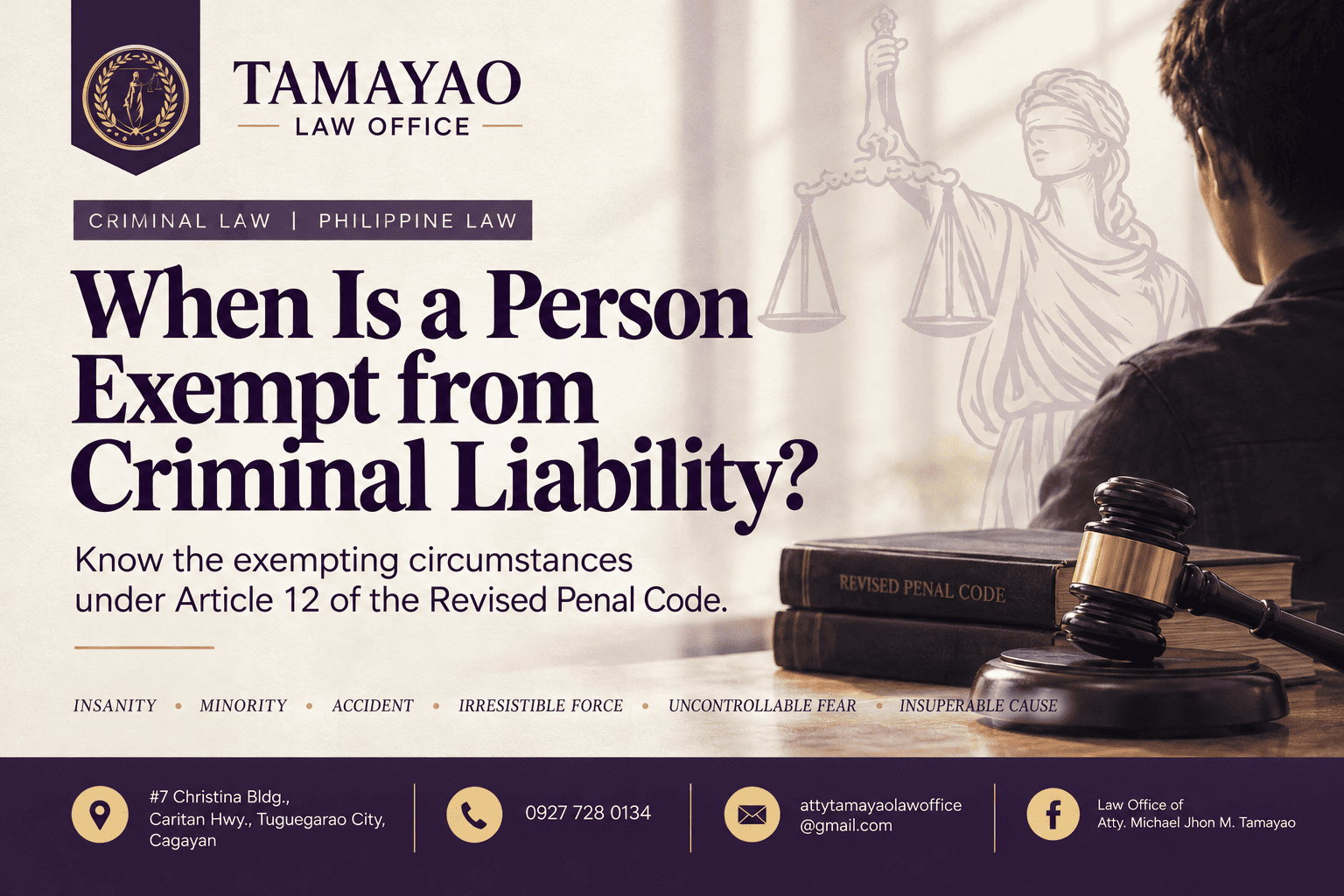
Exempting Circumstances in Philippine Criminal Law: When Is a Person Exempt from Criminal Liability?
Imagine a person commits an act that would normally constitute a crime. However, circumstances surrounding the act raise an important question: Can the person still be held criminally liable? Philippine criminal law recognizes situations where a person may be exempt from criminal liability because the law considers that the person lacked the necessary intelligence, freedom…
-
Defending Your Property in the Philippines: When Is the Use of Force Justified?
Imagine hearing someone breaking into a home, damaging a fence, or attempting to take control of a property. A person naturally wants to protect the place they own or lawfully possess. But an important legal question follows: When does defending property become legally justified, and when can the use of force result in criminal liability?…
-
Can a Child Sue a Parent for Failure to Provide Support in the Philippines?
Imagine a parent who stops providing financial support for a child. School expenses continue to increase, medical needs arise, and everyday necessities still require payment. Despite repeated requests, the parent refuses or simply fails to provide support. Can the child—or someone legally representing the child—take legal action? Under Philippine law, a child may seek support…
-
Can You Remarry Without an Annulment or Declaration of Nullity in the Philippines?
Imagine this: a person has been separated from a spouse for many years. They no longer live together, have built separate lives, and may even believe that the marriage has already ended. Years later, the person meets someone new and wants to get married again. A common question then arises: Can a person remarry simply…
-
Non-Compliance in the Philippines: Legal Obligations, Risks, and What the Law Requires
Imagine receiving a formal demand, regulatory notice, or order requiring you or your business to do something within a specified period. Perhaps the obligation comes from a contract. Perhaps a government agency issued the directive. In another situation, the duty may involve protecting personal information or submitting a required report. The immediate question often sounds…
-
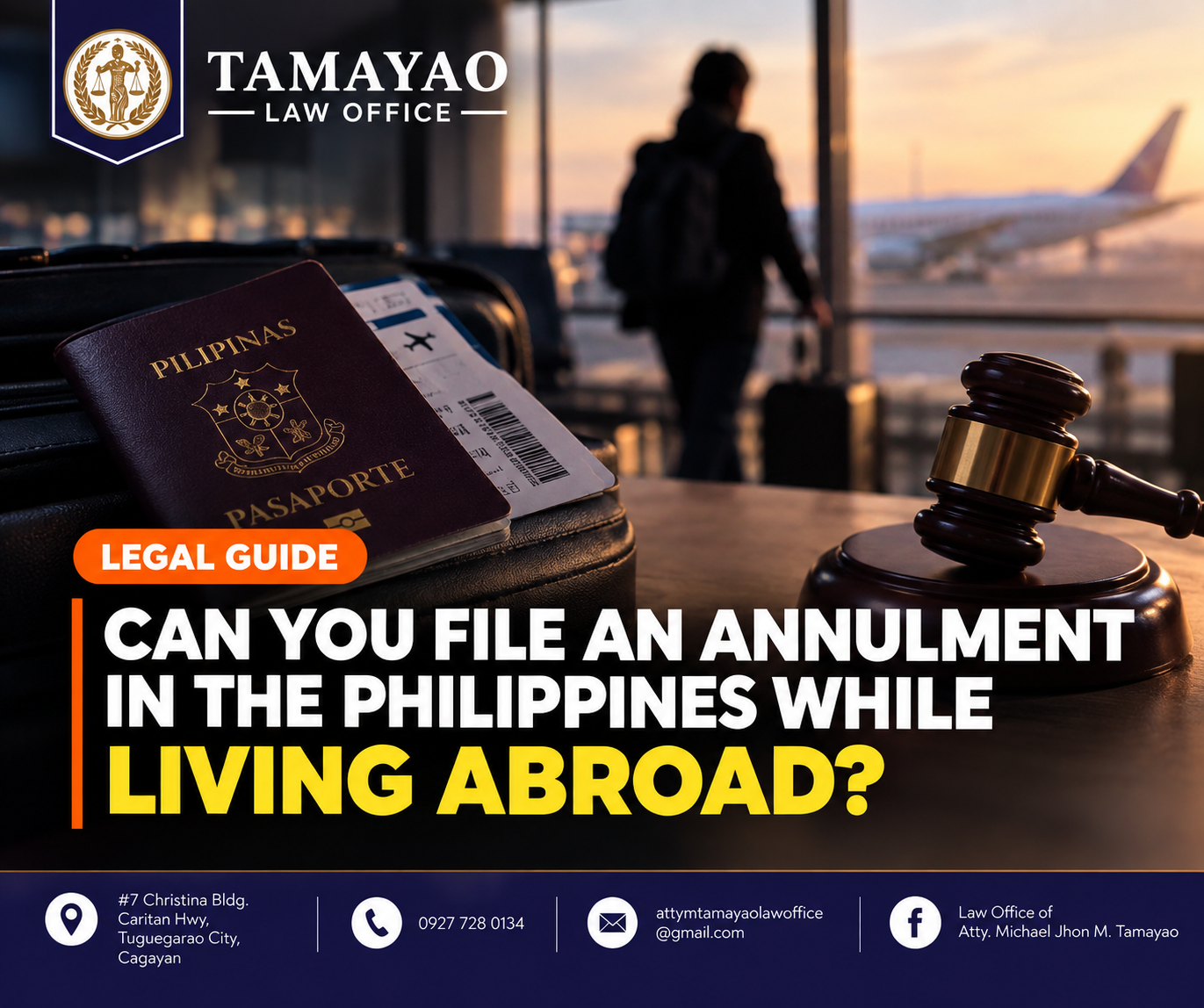
Can You File an Annulment or Declaration of Nullity in the Philippines While Living Abroad?
Introduction: Living Abroad Does Not Automatically Prevent a Philippine Petition Many Filipinos live or work abroad for employment, business, or other reasons. Some may eventually face questions about their marital status and wonder: Can a petition for annulment or declaration of nullity still be filed in the Philippines even if one or both spouses live…
-
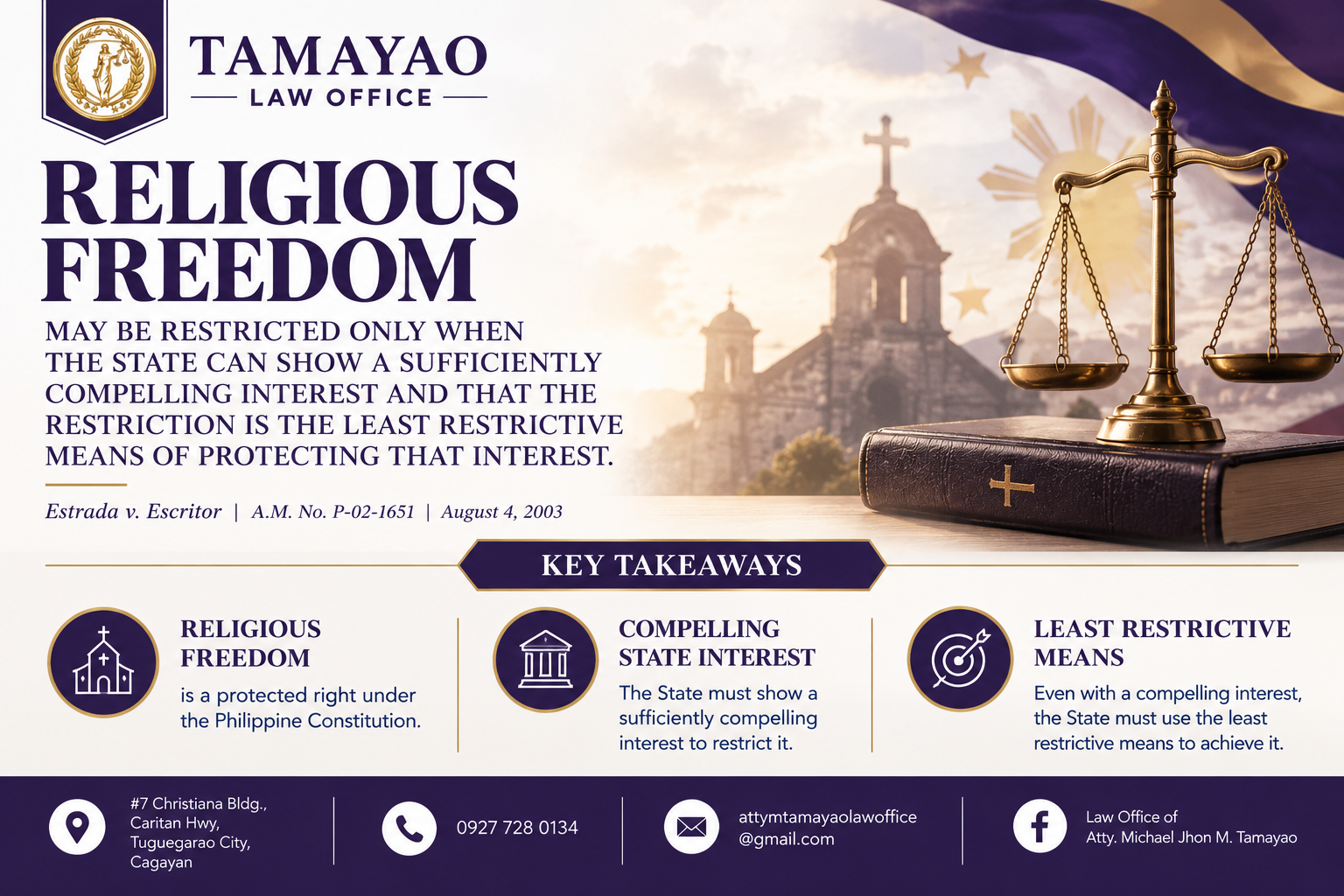
Religious Freedom in the Philippines: When Can the State Restrict the Free Exercise of Religion?
Introduction Imagine a person whose religious beliefs require a particular practice that conflicts with a government rule. The State may have a legitimate reason for enforcing that rule. However, does that automatically mean the government can restrict the person’s religious practice? Not necessarily. Religious freedom occupies a special place in constitutional law. The State may…
Popular Posts
- Just Causes vs. Authorized Causes: Understanding the Legal Grounds for Employee Termination in the Philippines
 Introduction: Can an Employer Legally Terminate an Employee? Imagine receiving… Read more: Just Causes vs. Authorized Causes: Understanding the Legal Grounds for Employee Termination in the Philippines
- Charged With Robbery After Withdrawing Money for Someone Else? Understanding Entrapment Under Philippine Law
 Introduction: Can You Be Charged With Robbery Just for Withdrawing… Read more: Charged With Robbery After Withdrawing Money for Someone Else? Understanding Entrapment Under Philippine Law
- How to Correct Errors in a Birth Certificate in the Philippines: Administrative and Court Remedies
 Introduction: Why Correcting a Birth Certificate Matters Imagine applying for… Read more: How to Correct Errors in a Birth Certificate in the Philippines: Administrative and Court Remedies
Archives
- October 2026 (6)
- September 2026 (4)
- August 2026 (7)
- July 2026 (4)
- June 2026 (3)
- May 2026 (2)
- April 2026 (8)
- March 2026 (8)
- February 2026 (8)
- January 2026 (10)
- December 2025 (8)
- November 2025 (9)
- October 2025 (4)
- August 2025 (1)
- April 2025 (1)
- March 2025 (3)
- February 2025 (11)
- January 2025 (7)
- March 2024 (4)
Tags
Agrarian Law Annulment Annulment Lawyer in Cagayan Valley Annulment Philippines Best Interest of the Child Business Law Cagayan Valley CIBER LIBEL Civil Litigation civil litigation Philippines Constitution criminal cases Criminal Liability Marriage Debt Trap Prevention DIVORCE Employee Rights Family Code Family Code Article 40 Family Law Illegal Dismissal Jurisdictional Demand Letter KIDNAPPING Labor Law Labor Law Philippines Labor Lawyer in Tuguegarao LAND DISPUTES lawyer in Tuguegarao lawyer near me NLRC Parental Kidnapping Philippine Family Law Philippine labor law Philippine Law Possession by Tolerance Property Law Property Rights Provisional Remedies Psychological Incapacity Regularization Safe Spaces Act security of tenure Tenancy Rights Tuguegarao Family Lawyer Tuguegarao Law Office VAWC