
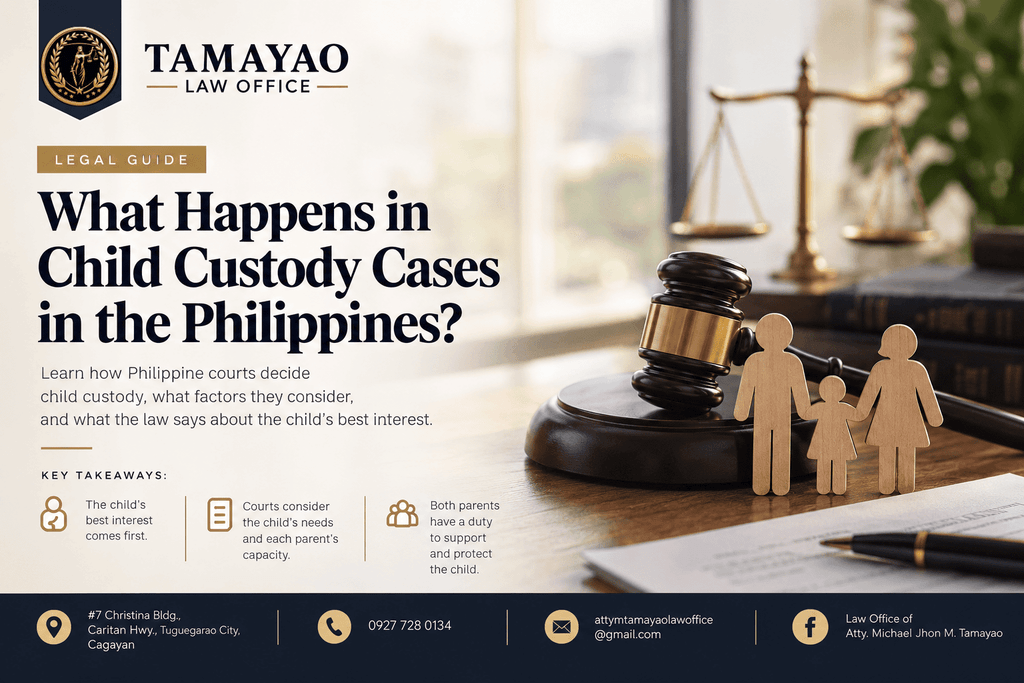
Imagine a parent who stops providing financial support for a child. School expenses continue to increase, medical needs arise, and everyday necessities still require payment. Despite repeated requests, the parent refuses or simply fails to provide support.
Can the child—or someone legally representing the child—take legal action?
Under Philippine law, a child may seek support from a parent who has a legal obligation to provide it. The Supreme Court has also recognized that the right to support cannot simply disappear because the parties previously abandoned, dismissed, or agreed not to pursue a support claim.
Two Supreme Court decisions, Del Socorro v. Van Wilsem and De Asis v. Court of Appeals, help explain these principles.
The Legal Duty of a Parent to Support a Child
Philippine law recognizes support as a legal obligation between parents and children. Support covers essential needs such as food, shelter, clothing, medical care, education, and transportation, taking into account the family’s financial circumstances.
The obligation does not depend solely on whether the parents remain together.
In Del Socorro v. Van Wilsem, G.R. No. 193707, December 10, 2014, the Supreme Court recognized that a parent’s legal obligation to support a minor child may be enforced in the Philippines.
The case also addressed the possible application of Republic Act No. 9262, or the Anti-Violence Against Women and Their Children Act. The Court recognized that an unjustified refusal to provide legally required support may constitute economic abuse when the requirements of the law exist.
Therefore, failure to provide support may involve more than a simple family disagreement. Depending on the circumstances, the law may provide civil and, in appropriate cases, criminal remedies.
Can a Child File a Case for Support?
Yes. A child, or the child’s proper representative, may pursue an action for support against a parent who has a legal duty to provide it.
However, the child must establish the legal relationship between the child and the alleged parent when filiation becomes an issue.
Importantly, the question of filiation does not always require a completely separate case. The supplied jurisprudence recognizes that the court may determine filiation as part of the support proceeding when the circumstances and applicable rules allow it.
Thus, a dispute over parentage does not necessarily mean that the child must first pursue an entirely separate case before seeking support.
What Happens If the Parent Says, “You Already Gave Up the Claim”?
This represents one of the important points in De Asis v. Court of Appeals, G.R. No. 127578, February 15, 1999.
The Supreme Court recognized that the right to receive support has a personal character. A person cannot simply renounce that right, transfer it to another person, or use a compromise to eliminate the right to future support.
Consequently, a previous agreement or decision not to pursue support does not automatically eliminate a child’s future right to receive support.
For example, a parent generally cannot rely solely on the following circumstances to permanently avoid a future support obligation:
- A previous support case ended through dismissal;
- The child’s representative previously decided not to pursue the claim;
- The parties previously agreed that no support would be demanded; or
- An earlier dismissal described the case as being “with prejudice.”
The continuing nature of the child’s right to support remains important.
What Must Be Established in a Support Case?
The specific requirements depend on the facts and the legal proceeding involved. Generally, the important issues include:
- Legal relationship or filiation. The child must establish the relationship with the alleged parent when the relationship remains disputed.
- Legal duty to provide support. The alleged parent must have a legal obligation to support the child.
- The child’s needs. The court considers the necessities of the person receiving support.
- The parent’s financial capacity. Support depends not only on the child’s needs but also on the means of the person who must provide it.
- Unjustified refusal or failure to provide support. Where the law requires support, the circumstances surrounding the parent’s refusal or failure become relevant.
- Applicable legal remedy. Depending on the circumstances, the child may pursue an action for support, seek temporary support while a case remains pending, or pursue other remedies recognized by law.
How Much Support Can a Child Receive?
Philippine law does not automatically impose one fixed amount of support for every child.
Instead, the amount depends on the child’s needs and the financial capacity of the parent who must provide support.
This approach recognizes that families have different circumstances. A child’s educational, medical, housing, and daily needs may differ substantially from those of another child. At the same time, the law considers the resources available to the parent.
The obligation may also continue even when the parents separate or when the child lives with another person.
Can Someone Else Provide Support and Ask for Reimbursement?
In certain circumstances, yes.
The Family Code recognizes situations where another person provides urgently needed support because a parent unjustly refuses or fails to provide it. Under the applicable rule, that person may seek reimbursement from the parent who had the legal obligation to provide support.
The law therefore recognizes that a child’s immediate needs should not necessarily remain unmet simply because the legally responsible parent refuses to act.
Common Misconceptions About Child Support
Myth: A parent can permanently give up the child’s future support through an agreement.
Not necessarily. De Asis v. Court of Appeals recognizes that the right to receive support cannot simply be renounced, and future support cannot generally become the subject of a valid compromise.
Myth: Parents can avoid support simply because they no longer live together.
The parents’ separation does not, by itself, eliminate the legal obligation to support their child. The child’s right to support remains distinct from the parents’ personal relationship.
Key Takeaway
A parent’s obligation to support a child does not depend solely on whether the parent and the other parent remain together or maintain a good relationship.
When a parent unjustly refuses or fails to provide legally required support, Philippine law recognizes legal remedies. Del Socorro v. Van Wilsem demonstrates that the obligation may be enforced and, when the statutory requirements exist, may also have consequences under R.A. No. 9262. Meanwhile, De Asis v. Court of Appeals emphasizes that the child’s right to support cannot simply be extinguished through renunciation or an agreement concerning future support.
For specific family circumstances, the proper remedy and the evidence required will depend on the facts of the case. Anyone dealing with a disputed support obligation may consult a qualified Philippine lawyer for guidance regarding the appropriate legal process.
For more Philippine legal information, readers may also explore the firm’s Articles section.

Leave a Reply