
Introduction
Many Filipino families encounter the same challenge after a loved one passes away. A parent leaves behind a house, a parcel of land, or other valuable properties. The heirs agree on how to divide the estate, yet they discover that transferring ownership involves several legal requirements.
In many cases, families ask whether they must go to court before they can transfer inherited property. Fortunately, Philippine law allows heirs to settle an estate without judicial proceedings under certain circumstances. This process is known as an Extrajudicial Settlement of Estate (EJS).
Understanding the requirements of an EJS is important because mistakes may delay property transfers, create problems with the title, or expose the transaction to future disputes. Therefore, heirs should understand the legal requirements before executing any settlement document.
The Legal Doctrine: What Is an Extrajudicial Settlement of Estate?
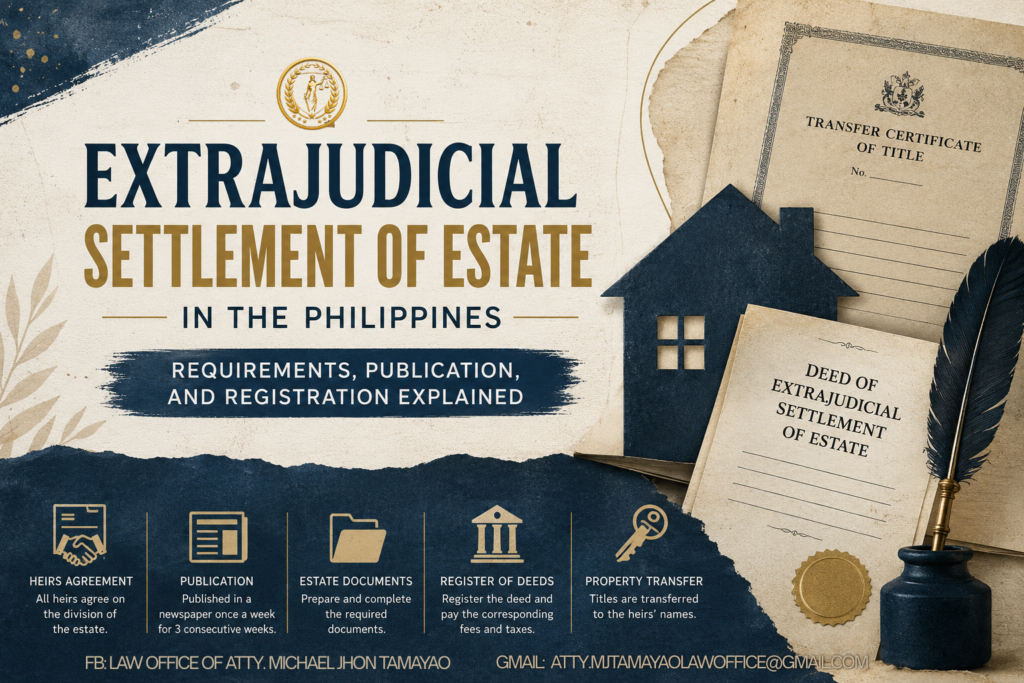
An Extrajudicial Settlement of Estate is a legal process that allows heirs to divide and distribute the estate of a deceased person without filing a court case.
Philippine law permits this procedure when specific conditions exist. Instead of asking a court to determine the distribution of the estate, the heirs execute a public document that states how they will divide the inherited properties.
When there is only one heir, the law may allow an Affidavit of Self-Adjudication instead of a deed of extrajudicial settlement.
However, an EJS is not available in every situation. The law imposes several requirements to protect creditors, other heirs, and third parties who may have an interest in the estate.
Moreover, the process does not end with the signing of the deed. The heirs must comply with publication requirements and register the settlement with the appropriate government offices, particularly when the estate includes titled real property.
When Is an Extrajudicial Settlement Allowed?
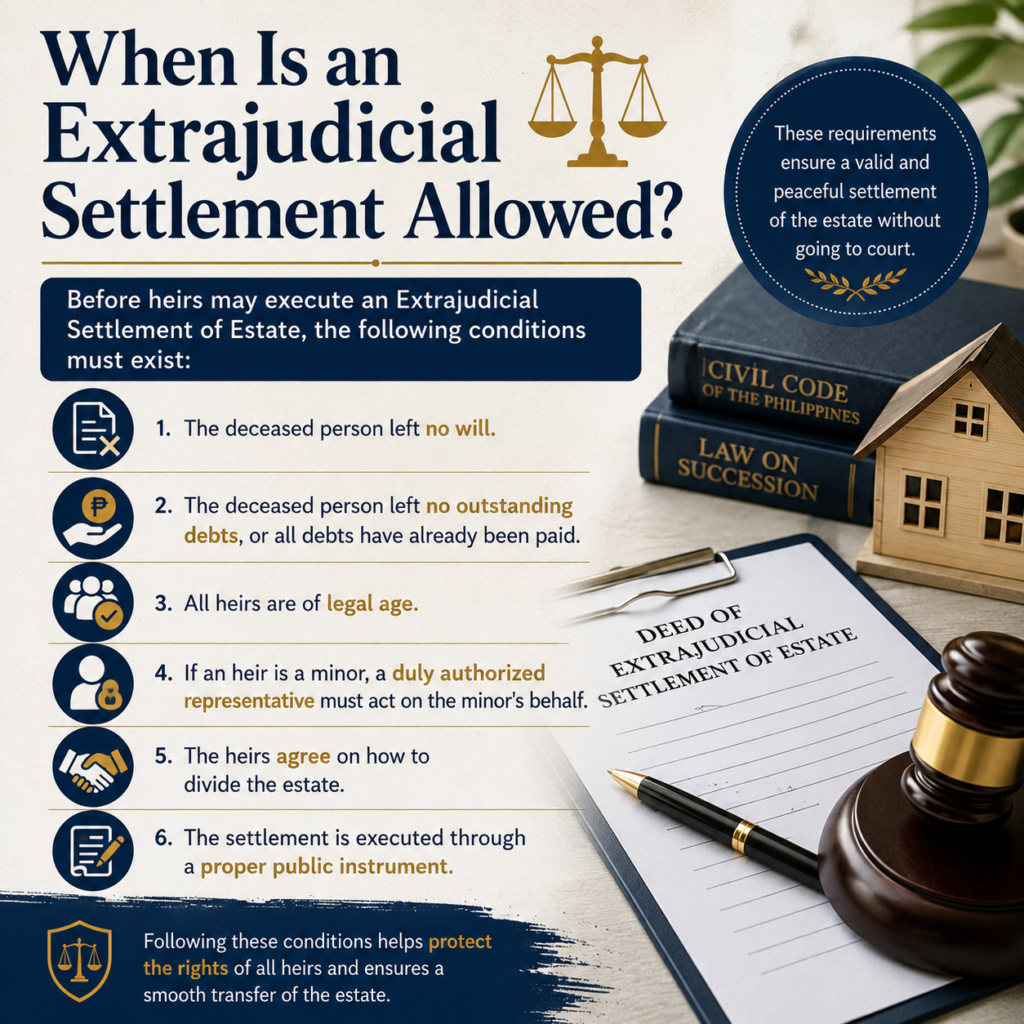
Before heirs may execute an Extrajudicial Settlement of Estate, the following conditions must exist:
- The deceased person left no will.
- The deceased person left no outstanding debts, or all debts have already been paid.
- All heirs are of legal age.
- If an heir is a minor, a duly authorized representative must act on the minor’s behalf.
- The heirs agree on how to divide the estate.
- The settlement is executed through a proper public instrument.
These requirements help ensure that the rights of all interested parties remain protected throughout the process.
Why Is Publication Required?
Many people assume that signing a deed automatically completes the settlement process. However, Philippine law requires more than a signed document.
As a general rule, the Deed of Extrajudicial Settlement of Estate must be published in a newspaper of general circulation once a week for three consecutive weeks.
This publication requirement serves an important purpose. It gives notice to potential creditors, omitted heirs, and other interested parties who may have claims against the estate.
Consequently, heirs should not ignore this step. Failure to comply with the publication requirement may create complications during registration and future property transactions.
After publication, the heirs typically obtain a Certification of Publication, which often becomes part of the documentary requirements for registration.
Why Must the EJS Be Registered?
blication alone does not transfer ownership on public records.
When the estate includes titled real property, the heirs should register the Extrajudicial Settlement with the Register of Deeds. The registration process allows the settlement to be properly annotated on the title.
This step is significant for several reasons:
- It creates an official public record of the settlement.
- It helps establish the heirs’ ownership rights.
- It facilitates future transfers or transactions involving the property.
- It allows the issuance of new titles in the names of the heirs when applicable.
- It provides greater protection to buyers and other parties who may later deal with the property.
As a result, registration plays a critical role in completing the settlement process.
Common Supporting Documents
The exact requirements may vary depending on the property and the circumstances of the estate. Nevertheless, several documents commonly appear during registration and estate settlement procedures.
These often include:
- The Deed of Extrajudicial Settlement of Estate.
- Certification of Publication from the newspaper publisher.
- Proof of payment of estate taxes or applicable tax clearances.
- Property-related documents required by the Register of Deeds.
- Other supporting documents that government offices may require.
Preparing these documents early may help prevent unnecessary delays.
Common Misconceptions About Extrajudicial Settlement
Myth #1: A Signed Family Agreement Is Enough
Many families believe that a private agreement among heirs automatically transfers ownership.
In reality, heirs must still comply with legal requirements, including publication and registration. Without proper compliance, future transactions involving the property may become difficult.
Myth #2: All Estates Can Be Settled Extrajudicially
Some people assume that every estate qualifies for an EJS.
That assumption is incorrect. The law only allows extrajudicial settlement when the required conditions exist. For example, unresolved debts or other legal complications may prevent heirs from using this procedure.
Practical Takeaway
An Extrajudicial Settlement of Estate offers a practical method for heirs to divide inherited property without court proceedings. Nevertheless, the process requires careful compliance with legal requirements.
Heirs should confirm that the estate qualifies for extrajudicial settlement. They should also ensure proper publication, secure the necessary supporting documents, and register the settlement with the Register of Deeds when titled property is involved.
By following the proper procedure, families can reduce delays and help protect their rights over inherited property.
Conclusion
The settlement of a loved one’s estate often involves both emotional and legal challenges. Fortunately, Philippine law provides a mechanism that allows qualified heirs to settle an estate without going through a lengthy court process.
However, an Extrajudicial Settlement of Estate requires more than a simple agreement among family members. Publication, registration, and compliance with documentary requirements remain essential parts of the process.
Understanding these requirements can help heirs avoid costly mistakes and move forward with greater confidence.
Call to Action
For proper guidance regarding estate settlement, land titles, and property transfers, it is best to consult a qualified legal professional who can evaluate the specific facts and applicable requirements.
Leave a Reply