
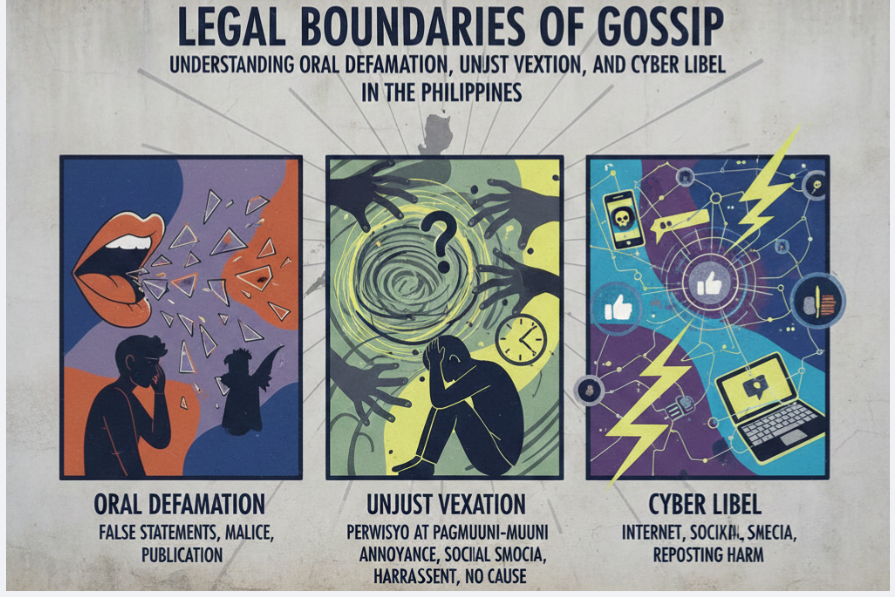
In the Philippines, the “Marites” culture—a colloquial term for neighborhood gossip—is a common social fixture. While sharing stories might seem like harmless bonding, the line between social chatter and criminal conduct is often thin. Imagine a heated argument between neighbors where one party shouts “Walanghiya!” and “Mangongotong!” in front of a crowd, or a frustrated individual posting an angry rant on Facebook. What many consider “just words” can lead to a criminal record.
Understanding the legal boundaries of speech is essential for every Filipino. This post explores the distinctions between Oral Defamation, Unjust Vexation, and Cyber Libel, and how the Supreme Court interprets these offense
The Doctrine of Oral Defamation (Slander)
Oral Defamation, or slander, occurs when someone speaks base and defamatory words that prejudice another’s reputation, office, or trade. Under Article 358 of the Revised Penal Code, the law distinguishes between “Grave” and “Slight” Oral Defamation. This distinction determines the severity of the penalty and the time limit for filing a case.
In the landmark case of De Leon v. People (G.R. No. 212623, 2016), the Supreme Court clarified that the gravity of the offense depends on more than just the words used. Courts must evaluate:
- The specific expressions used;
- The personal relationship between the parties; and
- The special circumstances and antecedents that prove the speaker’s intent .
The “Heat of Anger” Rule
The Court often downgrades a charge from Grave to Slight Oral Defamation if the speaker uttered the words in the “heat of anger” or after provocation. In the De Leon case, the petitioner called a police officer a “shameless extortionist” during a confrontation. The Court ruled this as Slight Oral Defamation because it was a “mere product of an emotional outburst” rather than a calculated attempt to destroy the officer’s character.
Profanity and the Context of Threats
Filipino culture often uses colorful language during disputes. In Reyes v. People (G.R. Nos. L-21528-29, 1969), the Supreme Court addressed the use of the phrase “putang ina mo” . The Court noted that this is a common expression used to convey anger or displeasure rather than a literal slander against a mother’s virtue .
The doctrine established in Reyes emphasizes the “principal aim” of the speaker. If an individual uses defamatory words to make a threat more emphatic—such as shouting “Agustin, putang ina mo… papatayin kita”—the insults are absorbed into the more serious crime of Grave Threats . Consequently, the law does not punish the defamation separately if it merely serves as a “preparatory remark” for the threat .
Unjust Vexation: The “Catch-All” Offense
If an act does not involve defamatory words but still “annoys” or “disturbs” the peace of mind of another, it may fall under Unjust Vexation. Article 287 of the Revised Penal Code serves as a catch-all for conduct that unjustly irritates an innocent person .
Requisites for Unjust Vexation:
- Human Conduct: An overt act or behavior directed at the victim.
- Lack of Violence: The act must not involve physical force or more serious coercion .
- Mental Disturbance: The conduct must cause annoyance, irritation, torment, or distress to the victim’s mind .
- Malice: The offender must act with the intent to annoy (dolo) .
Examples include persistent nuisance calls, blocking someone’s path, or even unwanted public physical advances like embracing that cause distress .
The Digital Escalation: Cyber Libel
When gossip moves from the sidewalk to social media, the legal stakes rise significantly. Section 4(c)(4) of Republic Act No. 10175 (The Cybercrime Prevention Act of 2012) governs Cyber Libel.
The Supreme Court in Disini v. Secretary of Justice explained that Cyber Libel is not a new crime; it is traditional libel committed through a computer system . However, because the internet allows defamatory posts to reach more people instantly and permanently, the law imposes a penalty one degree higher than traditional libel. This means a simple Facebook post can result in significantly longer imprisonment and a minimum fine of P200,000.
Procedural Requirement: Barangay Mediation
Before a victim can file a case in court for Slight Oral Defamation or Unjust Vexation, the law usually requires mandatory mediation at the Barangay level. Under the Katarungang Pambarangay Law, if both parties reside in the same city or municipality, they must first attempt to reach an amicable settlement. Only if mediation fails will the Barangay issue a “Certificate to File Action” allowing the case to proceed to the Prosecutor’s Office.
Common Misconceptions
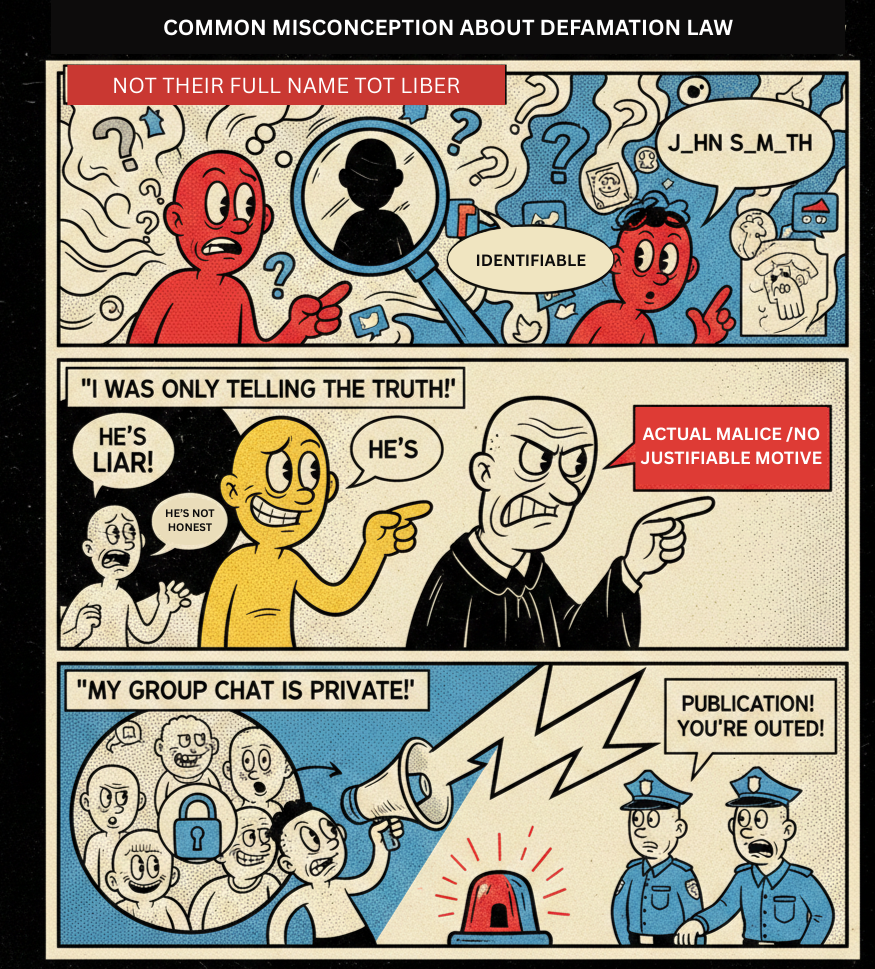
“It’s not libel if I didn’t use their full name.” The law only requires that the victim be “identifiable.” If context, photos, or descriptions allow a third party to know who you are talking about, the identification element is satisfied.
“I was only telling the truth.” Even if a statement is true, you can still be liable for defamation if you spoke with “actual malice” or lacked a justifiable motive for revealing the information.
“My Group Chat is private.” “Publication” occurs the moment a third person hears or reads the statement. If someone in your private group leaks the message, you can still face charges.
Conclusion
The Philippine legal system balances the right to free expression with the protection of personal honor. Whether through the “heat of anger” doctrine in De Leon or the “principal aim” test in Reyes, the courts carefully examine the context of every utterance. However, the rise of Cyber Libel serves as a reminder that digital footprints are lasting and legally costly.
For proper guidance on specific legal concerns regarding reputation or harassment, it is best to consult with a legal professional. You may explore our other articles for more information on rights and responsibilities, such as our guide on the(https://tamayaolawoffice.com/safe-spaces-act-catcalling-cyberstalking-rights/) .



Leave a Reply